
Montclair Previous Residents Sources
A Montclair previous residents search works best when each record type is kept in its proper lane. PRESS documents a recorded instrument and the parties to it. Directories offer annual or periodic address evidence. Maps show a parcel or building footprint. Census records can identify a household at a particular enumeration date. The overlapping table below makes it easier to see which source can help after another one stops.
| Source | Years | Where | What It Shows |
|---|---|---|---|
| PRESS remote index | Search notice: 10/01/1996 onward; electronic transactions: 05/01/2001 onward | Essex County Register online | Instrument, party, property, and date; image availability depends on date and type |
| Public Vault and land books | Early 1700s onward | Hall of Records, Newark | Deeds, mortgages, plats, grantor/grantee, and legal descriptions |
| Computerized Register indexing | Since 12/1988 | Essex County Register | Indexing history; remote and office boundaries are not identical |
| Montclair directories | 1870-1969 | MPL and MHC digital and physical collections | Historical address, business, occupation, and occupant clues as printed |
| Telephone directories | 1980-1997 | MPL and MHC | Subscriber, address, and phone evidence as printed |
| Montclair Times | From 1877 | MPL microfilm | Notices, obituaries, property and local-event leads |
| MHC maps and 1986 Sanborn | Maps: 1865, 1872, 1878, 1890, 1899, 1901, 1906, 1918, 1926, 1928, 1933, 1934; Sanborn: 1986 | MHC catalog and Township map resources | Street, parcel, building, and development context |
| Federal census | 1790-1950 | Federal census sources, libraries, and genealogy databases | Household names, ages, relationships, and enumeration context |
The federal census is released after 72 years; 1950 is the newest released decennial census in the research record. Start with a current parcel for a recent address question, but start with a directory or map when an older street name is the only clue.
Montclair Parcel Records Start
Begin Montclair previous residents research with the Montclair Properties Information Portal. The Township describes its SDL search as supporting full or partial address, owner name, block, lot, permit number, and control number, with a free account required. Record the municipality, present owner as shown, block and lot, legal description when available, and any visible instrument or permit detail. An owner mailing address and the property's situs address should stay in separate notes.
The key path is: SDL parcel and block/lot → PRESS purchase instrument → named seller or grantor → that party's earlier acquisition → the prior seller. A trust, estate, corporation, spouse, sheriff's deed, mortgage release, or missing image can interrupt the line. The legal description, block and lot, instrument date, and prior-deed reference are safer anchors than a modern street number alone.
The Township ArcGIS viewer can add parcel geometry, Wards, Voting Districts, Schools, polling locations, and other municipal layers after an address search. It is a geographic aid rather than a resident list. Use it to orient a parcel and compare the visible street pattern, then verify the property information through SDL and the recorded transfer through PRESS.
House-history rule. Past residents research is for personal, family, property, and local-history questions. Do not use names or addresses to stalk, harass, or harm a living person.
Montclair Deed Records Chain
Essex PRESS is the official remote route for recorded land instruments. Search by the property information or by a party name, then record the instrument number, document type, recording date, book and page when displayed, grantor, grantee, and legal description. The recorded purchase document can identify the seller from whom the current party acquired the property. Search that seller as a prior grantee to find the earlier purchase, then repeat.
- Use the SDL parcel record to write down the block, lot, and legal description before starting a name search.
- Find the current owner's purchase instrument in PRESS by property, name, date, or document type.
- Copy the grantor, grantee, recording date, instrument reference, and any prior-deed reference from the result.
- Search the seller as a grantee or owner to locate that party's earlier acquisition, using name variants and the parcel details.
- Repeat the sequence until the remote results stop, then carry the references to the Newark Public Vault and land books.
- Grantor
- The party transferring an interest in a recorded instrument.
- Grantee
- The party receiving that interest. A prior grantee search can reveal an earlier acquisition.
- Chain of title
- The linked sequence of recorded transfers for a parcel, built from the instruments rather than a single name hit.
- Legal description
- A parcel description such as block and lot, metes and bounds, subdivision, or prior-deed reference. It can outlast street-number changes.
Older deeds may use a subdivision, metes-and-bounds description, or a reference to an earlier instrument instead of a modern house number. Compare those details to Montclair tax maps and the historical map sequence before joining an early deed to a present street address. If a transfer has legal significance, verify the instrument with the Register rather than relying on an index extract or a secondary transcription.
Montclair PRESS Records Access
PRESS has two relevant dates that should not be collapsed into one promise. Its search page says records can be searched from October 1, 1996, while the Register describes electronic public access for property transactions from May 1, 2001 to the present. Earlier research belongs in the Public Vault and books in Newark. The Register reports 17,741 land books, excluding electronic recordings, and recording/indexing computerized since December 1988.
The remote search has a maximum 90-day From/To range and is not a title search. Register staff can explain access and the indexing system, but cannot perform a title search. Copies are listed at $8 for the first page and $2 for each additional page. Mortgage cancellations before July 2, 2012 can be indexed without an electronic image, another reason a result may require counter research.
Use the official PRESS search for the remote index.
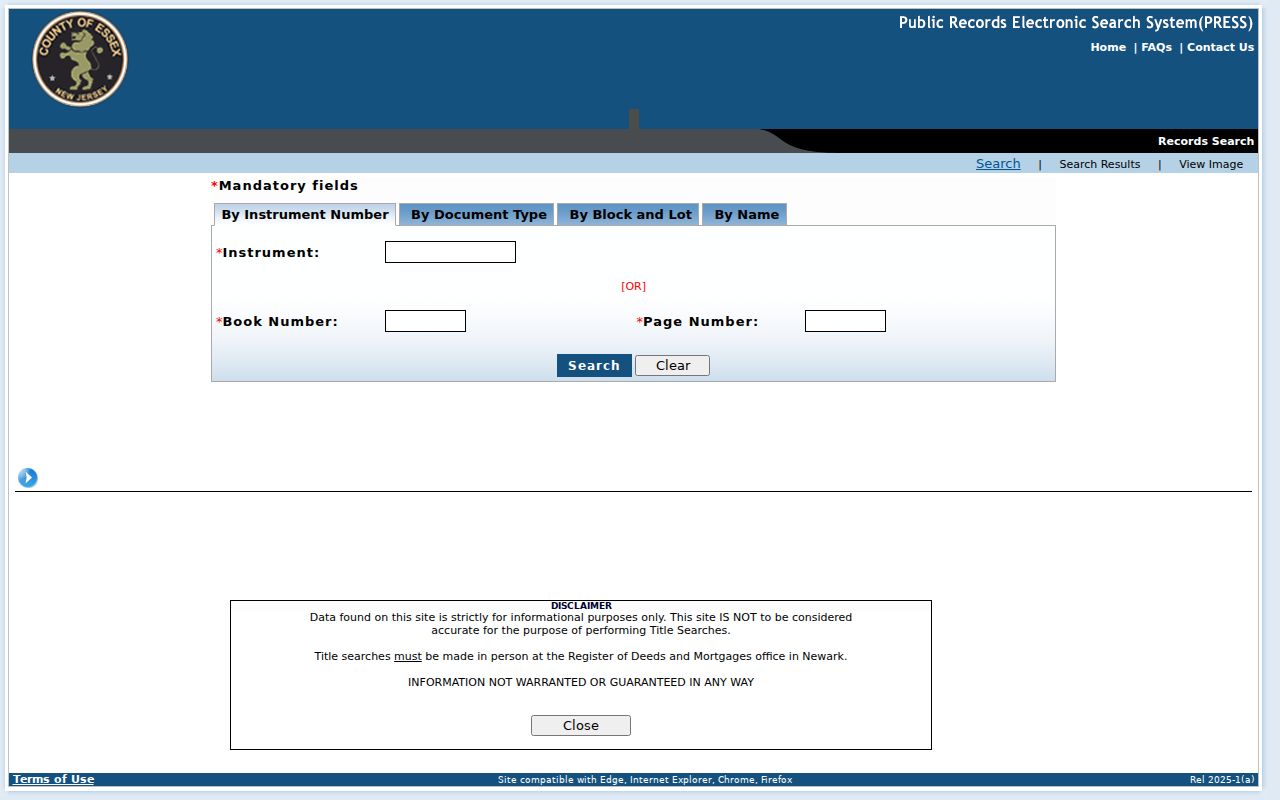
The index identifies a recorded trail, while the original book, image, or certified copy supplies the document needed for a legal fact.
Montclair Past Residents by Directory
Ownership is only one part of the history for Montclair previous residents. The 1870-1969 directory run and the 1980-1997 telephone sequence can place a printed name or subscriber at an address, subject to the details actually printed in that year. A street-order or reverse section, when present, is useful for approaching a known address. The City Directories collection contains the shelf details and the cautions for reading a volume without overreading it.
Pair a directory year with the closest released federal census. A practical household flow is: exact street address → dated directory page → nearby directory years → federal census household and enumeration district → Montclair Times notice, probate, or cemetery lead. An entry that disappears could reflect a move, death, changed spelling, an omission, or a changed publication practice. It does not establish the reason by itself.
Montclair History Online offers the digitized-history starting point for directory, phone-book, deed, map, and image material.
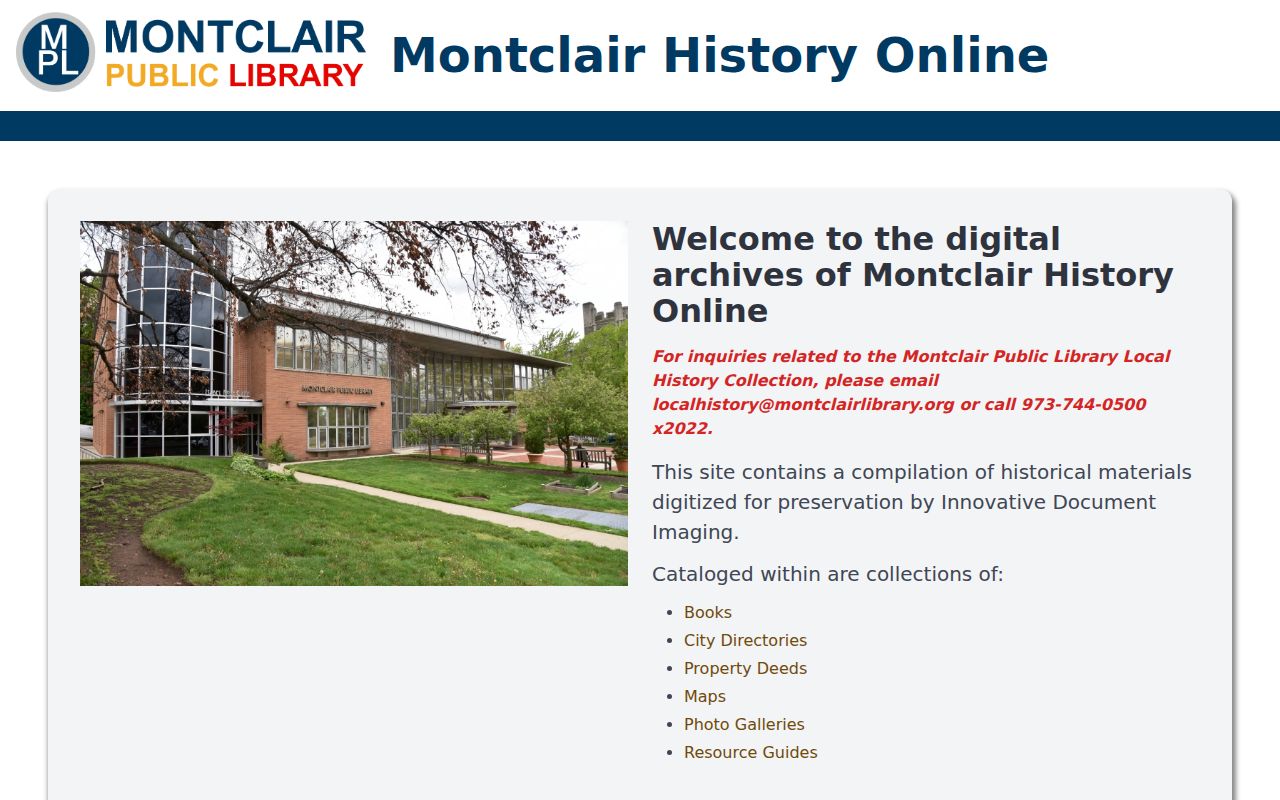
Compare the scan with its year and page context; a historical listing is not a current resident claim.
Montclair House-History Records Maps
The Montclair History Center house-history guide connects the local research route: city and phone directories, maps, the 1986 Historic Sanborn Maps of Montclair, 1850 and 1874 county maps, photos, the Hall of Records, and an interactive historic inventory. The guide's map sequence includes 1865, 1872, 1878, 1890, 1899, 1901, 1906, 1918, 1926, 1928, 1933, and 1934.
Maps can date a footprint, addition, land use, or neighborhood build-out. They do not prove who occupied the building. Likewise, a permit can date construction or alteration and may identify parties when a record displays them, but it is not proof that a particular person lived there. Pair map or permit evidence with a deed, directory, census, or dated notice.
Montclair's historic-inventory route can add a building date, architecture, history, and significance where a survey form exists. Search a house or business in the interactive inventory, select the structure, and review the survey form linked from the popup. That is building-context evidence, not a substitute for the property-transfer sequence or household evidence.
Open the house-history guide for the local source path.
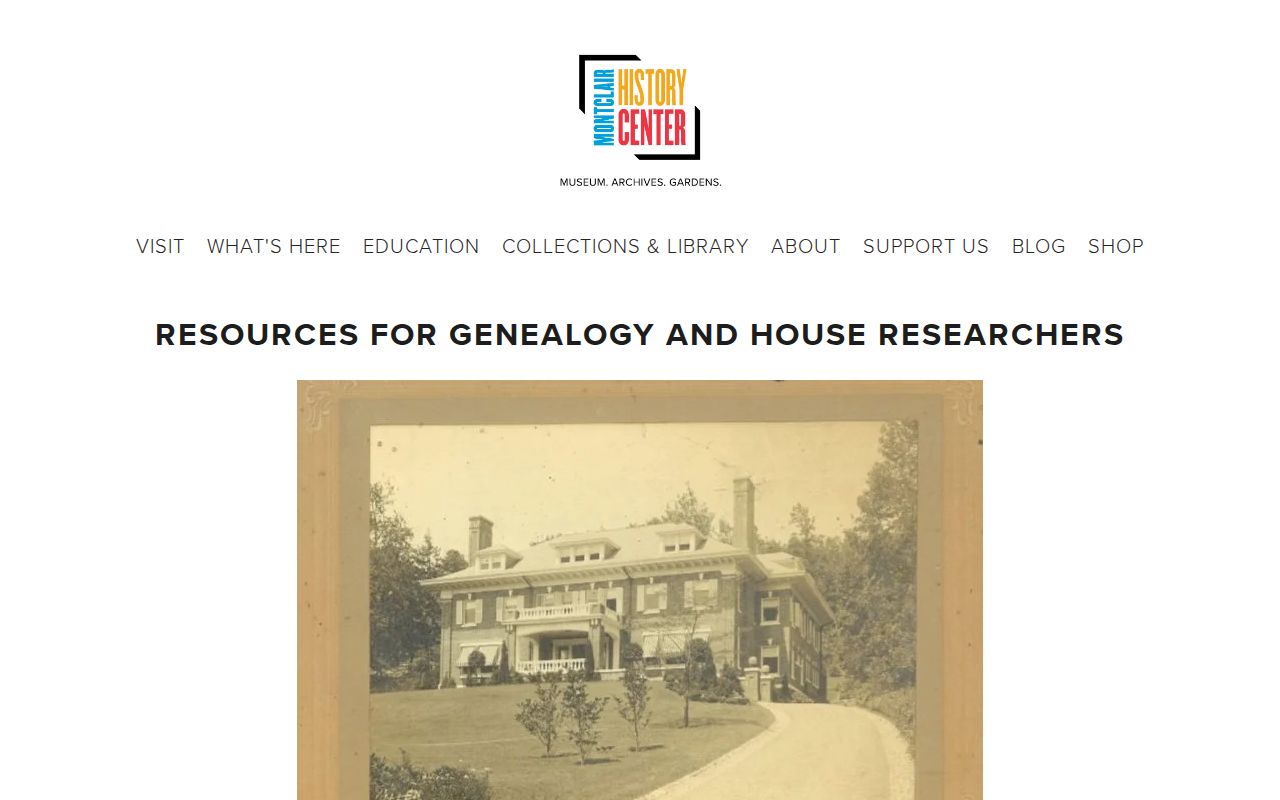
The guide provides a documented route to corroborating sources rather than a single list of everyone who lived in a home.
Montclair Historical Name Continuity
A modern street name does not guarantee that an earlier record will use it. The 1850 Essex County map calls Montclair West Bloomfield and Upper Montclair Speertown. Search those names alongside Montclair when an early map, property-holder reference, or local-history file comes up empty. They are historical naming clues, not evidence that an address was renumbered.
No inspected official source verified a townwide Montclair street-renumbering year, and none verified a courthouse fire or records-loss event. Do not invent either explanation for a missing result. Compare street-name history, tax maps, legal descriptions, neighboring house numbers, block and lot, and the deed reference chain before deciding that an address changed.
Montclair Archive Records Paths
Historical household research can continue beyond a directory or deed. New Jersey State Archives genealogical collections include vital, census, divorce, land, and tax-ratable material. For Montclair's local-history material, the Albert P. Terhune Library at Clark House, 108 Orange Road, is open Tuesday through Friday, 9 a.m. to 3 p.m. by appointment; call 973-744-1796 or email mail@montclairhistory.org. The 2025 MPL, MHC, and Historic Preservation Commission home-history workshop also confirms an active local support route.
When a specific municipal record is not posted, use a narrow Montclair OPRA request or the State's official OPRA routing guidance. Identify an address or block and lot, a date range, and the named record series, such as a permit file or available inspection record. The custodian can clarify an overbroad request and redact protected information. OPRA is not the replacement route for a Register instrument or a court file.
The directory and property records do not show every household member, and utility-customer data should not be assumed public. When an older resident appears to leave the record trail, Montclair Times notices, an Essex Surrogate probate file, cemetery material, or a State Archives collection can supply a separate endpoint. Keep the document type and date beside the result instead of turning a historical lead into an unsupported claim about who lived there.
Search the State Archives collections when the question has moved beyond local printed sources.
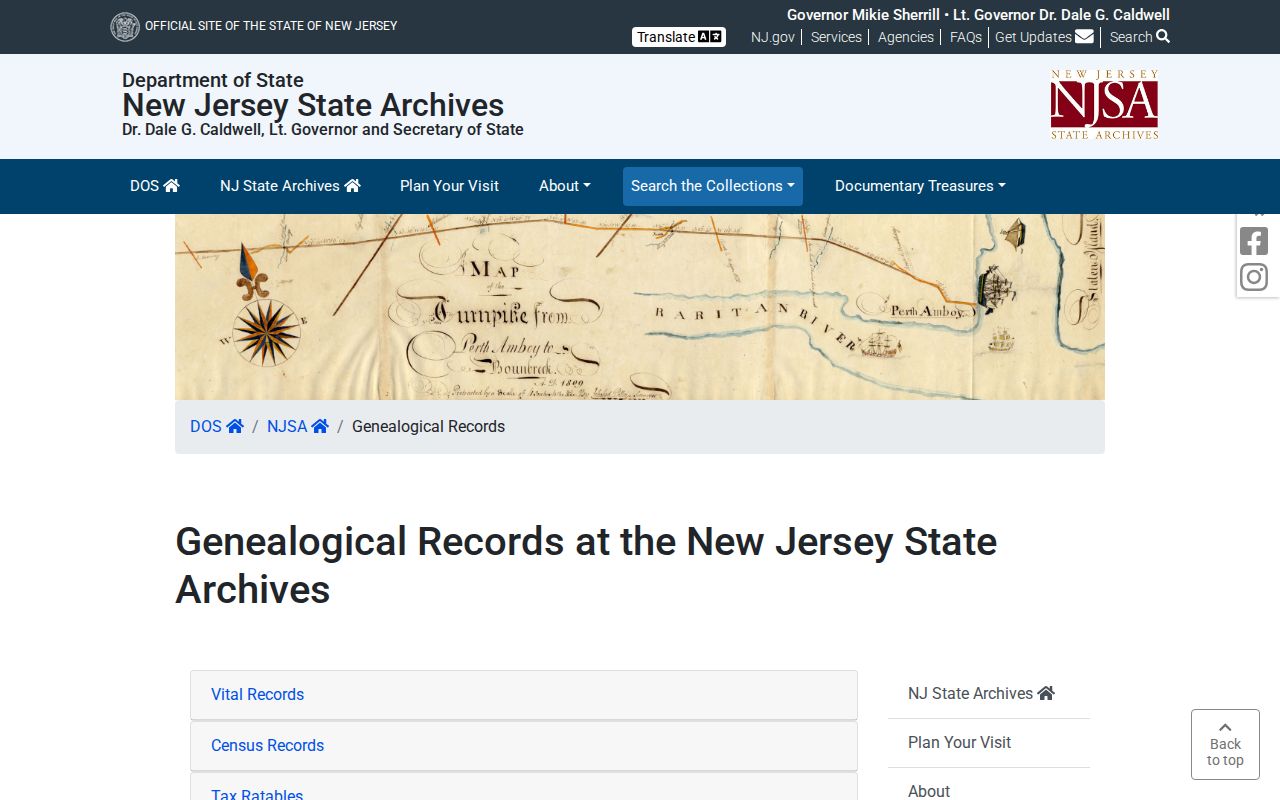
Archives material can extend a documented trail, but the record set and its date coverage must be noted beside every result.