
Montclair City Directory Collections
Montclair's historical shelf is shared by Montclair Public Library and the Montclair History Center. The published run is broad but not uniform: a Montclair city directory scan can show different details from one year to the next, and official catalog pages do not supply a complete publisher or imprint list. Treat each volume as its own source. The table separates the directory run from related material that can confirm an address, explain a local event, or show how a street developed.
| Collection | Years | Where Held | Access |
|---|---|---|---|
| Montclair city directories | 1870-1969 | MPL digital/history collection; physical MPL and Albert P. Terhune Library copies | Online scans and in-person reference |
| Digitized pre-1900 portions | Portions of 1870-1899 | Montclair History Online and History Center collections | Search or inspect available scans; exact volume list varies |
| Telephone directories | 1980-1997 | Montclair History Online and MPL collection | Digital and physical historical reference |
| Montclair Times microfilm | From 1877 | MPL Local History Room | In-person microfilm reference |
| MHC maps | 1865, 1872, 1878, 1890, 1899, 1901, 1906, 1918, 1926, 1928, 1933, 1934 | History Center Online Collections | Online collection search |
| Yearbooks, biography files, and subject files | Varied | MPL Local History Room and MHC | Ask staff about the relevant name or topic |
Telephone books are a later bridge, not a replacement for the older run. A printed subscriber listing, an obituary notice, and a directory entry answer different questions. Record the page, year, spelling, and source beside every finding.
Montclair Directory Shelf Access
Montclair History Online is the digital starting point for directories, telephone books, deeds, maps, books, and images. For physical help, the Montclair Public Library Local History Room is at 50 South Fullerton Avenue; its local-history contact is localhistory@montclairlibrary.org and 973-744-0500 x2022. The room also holds Biography and Subject Files, yearbooks, and Montclair Times microfilm.
The Albert P. Terhune Library at Clark House, 108 Orange Road, holds late-nineteenth-century phone books, directories, maps, photographs, yearbooks, oral histories, family files, and deeds. It is open Tuesday through Friday, 9 a.m. to 3 p.m., by appointment. Contact mail@montclairhistory.org or 973-744-1796. The research-services page uses a suggested $10 DIY-research donation, while the Clark House page states a suggested $5 donation and members free, so confirm the current wording when arranging a visit.
See the Albert P. Terhune Library details before an appointment.
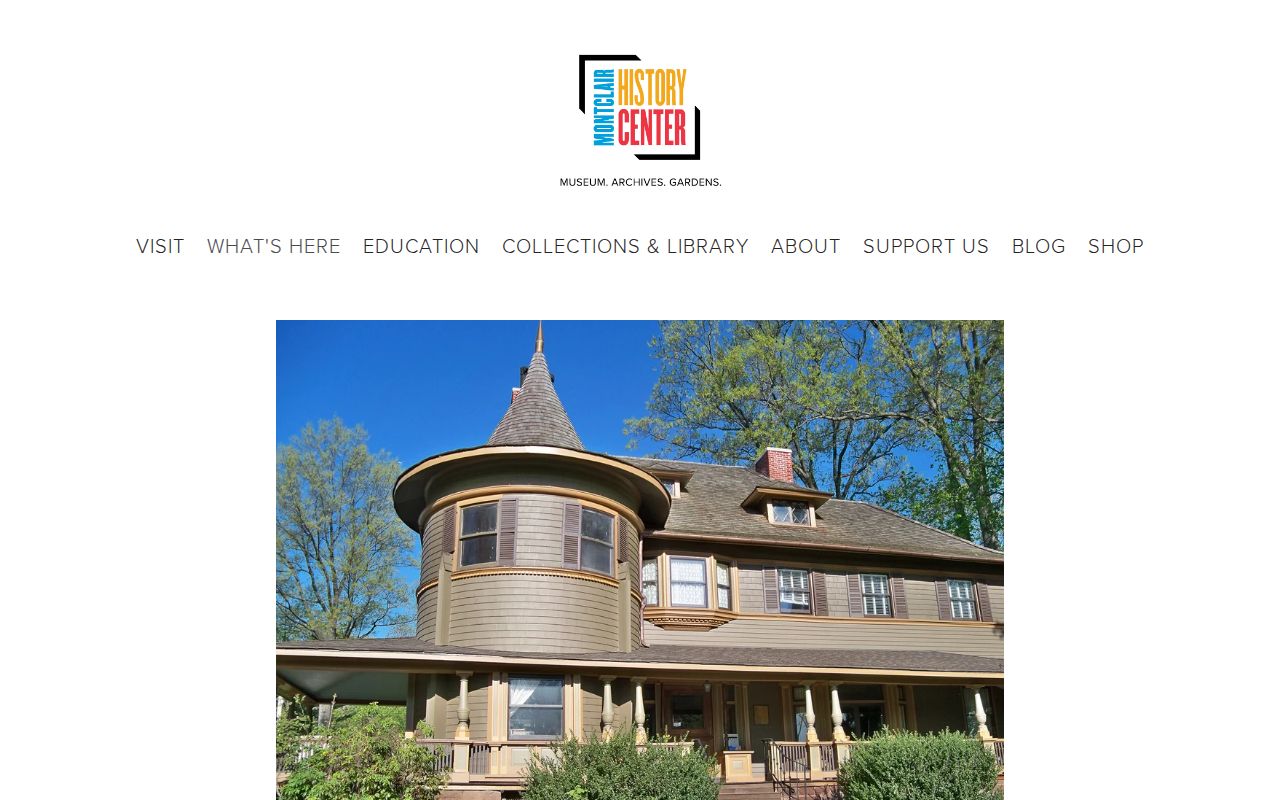
The appointment route is useful when a needed volume, map, or file is not represented by a public scan.
Bring the name, approximate year, street spelling, and a list of volume references when possible. The library and History Center are reference pathways for local material, while a request for a certified land record belongs with the Essex County Register. A staff-assisted shelf search can clarify whether the useful next item is a directory, map, yearbook, newspaper reel, deed collection, or vertical file.
Reading Montclair Directory Entries
Begin with an alphabetical name listing when the person is known, then look for the street or reverse portion when the address is known. A representative entry may give a surname and given name, initials, a spouse or relationship notation, occupation or employer, a street address, a business or institution, and later a telephone number. Owner, renter, boarding, widow, and abbreviation marks may appear, but no official source establishes that every Montclair volume uses the same marks. Check the scan's own key before interpreting one.
| Name and initials | Copy spelling exactly, including initials and any cross-reference. |
|---|---|
| Relationship wording | A spouse, widow, or other notation may appear when printed; it is a lead, not proof by itself. |
| Work or institution | An occupation, employer, business, or organization can distinguish similar names when the volume supplies it. |
| Street address | Record the number and street as printed, then compare nearby years and maps if numbering is uncertain. |
| Volume evidence | Keep the year, page, directory imprint, and any visible abbreviation key with the transcription. |
- Criss-cross directory
- A street-order or reverse section, if the volume includes one, that lets a reader approach an address rather than a surname.
- Householder index
- An index organized around household or address entries when the edition supplies one; it should be read with the printed page.
- Abbreviation key
- The volume's own explanation of shortened words and symbols. Photograph or transcribe it before assigning meaning to a mark.
Do not read an entry as a complete household list or a present-day location. Publication schedules, omissions, and the field set itself can vary by scan.
Copy the surrounding entries when an address is the research target. Neighbors, a business listed on the same block, or a repeated initial can help distinguish similar names. Preserve uncertainty in the notes: an apparent move between two years may instead reflect an abbreviation change or a volume that did not print the same class of entry.
Montclair Online Directory Search
Montclair History Online brings the local history catalog together in one place. Its digital holdings include the historical directory and telephone material alongside maps, deed books, photographs, and books. Pre-1900 material was prepared for online search through the MPL and MHC digitization project, but the availability of a particular year should be checked in the collection rather than assumed from the overall date span.
Open the digital collection to inspect a source page.
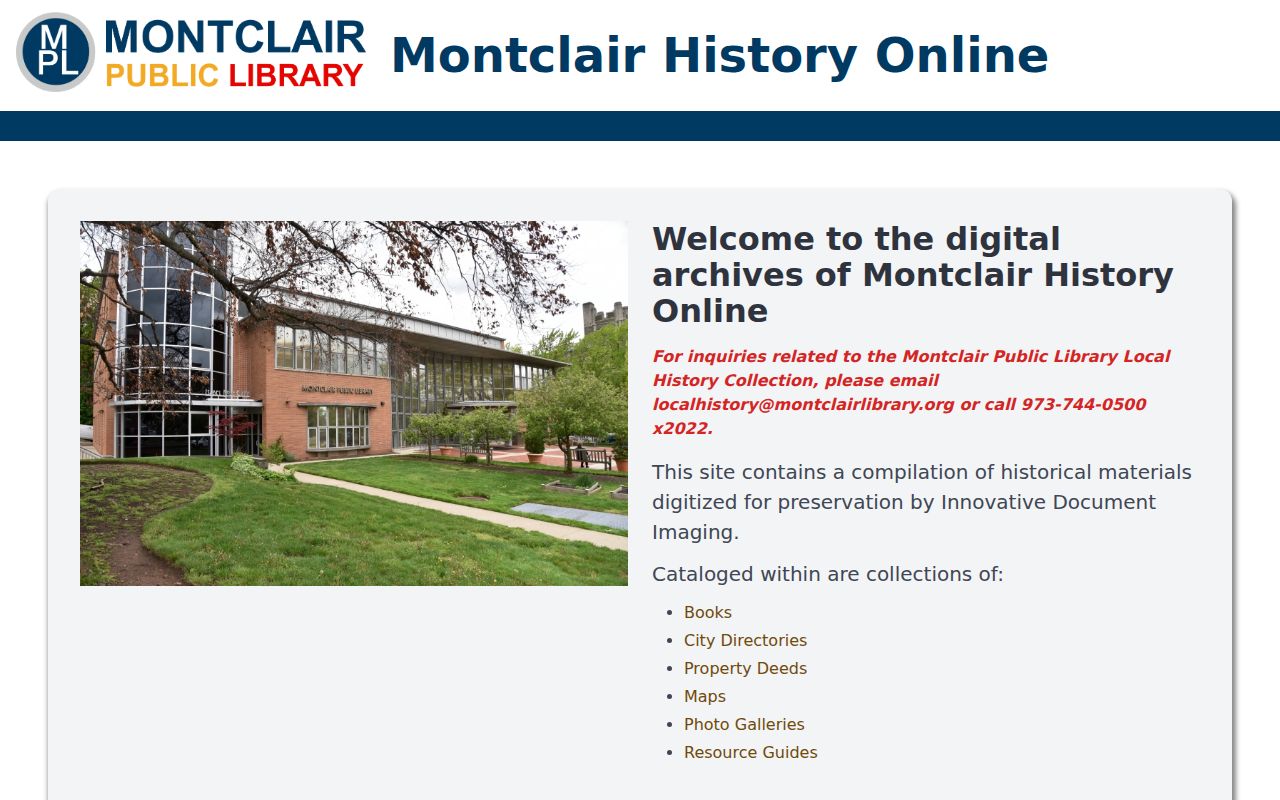
A source page can preserve the context that a text-only search result leaves out, including neighboring listings and the volume's printed key.
Montclair Directory Timeline
The record trail changes with the era. Montclair became a township in 1868 after the earlier West Bloomfield and Crantown area grew around rail access. The city directory run begins soon after, covers the late-nineteenth-century and early suburban-growth years, and is followed by the later telephone-book run.
- 1870: The documented Montclair directory run begins.
- 1870-1899: Digitized pre-1900 portions were prepared for online searching; confirm the individual scan before relying on it.
- 1877 onward: Montclair Times microfilm at MPL can add notices, local events, and obituary leads.
- 1969: The documented city-directory run ends.
- 1980-1997: Telephone directories provide a separate later series.
- 2025: MHC moved its broader collections database to PastPerfect Web Edition after updating more than 16,000 objects and archival materials.
Note: official sources do not provide a complete publisher-by-year list, so an imprint should be recorded from the particular volume rather than filled in from memory.
Using Montclair Directories for Family History
Pair annual or periodic address evidence with a federal census rather than asking one source to do all the work. The federal census follows a 72-year public-release rule; 1950 is the newest released decennial census in the research record. Directories can narrow a move to a shorter window, while the census can add a household relationship, age, birthplace, or enumeration context. The results should still be compared with the actual address and year.
- Find the first appearance of the surname, initials, or street address in a dated volume.
- Trace the entry through nearby directory years and preserve changes in spelling, address, or listed institution.
- Check a street-order section when present, then compare adjoining numbers without claiming every resident of the block.
- Pair the closest directory date with the relevant released federal census and its enumeration district or address context.
- Use the Montclair Times, cemetery material, probate, or an oral-history collection as a separate endpoint or context source.
A disappearance may reflect a move, death, omission, changed spelling, or changed publication practice. It is a prompt to check the next source, not a conclusion. For one-address ownership research, use the Past Residents trail instead of treating a directory listing as a deed.
Montclair Names Before Incorporation
An empty search for Montclair does not always mean the place or family is absent from an early source. The 1850 Essex County property-holder map uses West Bloomfield for Montclair and Speertown for Upper Montclair. Those historical names are useful search variants, especially when a directory-era address is being connected to an earlier map, deed, or local-history file.
The MHC house-history guide links Montclair maps and the 1850 and 1874 county maps. It also identifies the 1881 Montclair section at Part 2, page 14, and the 1890 Montclair section at page 18.
Use the house-history resources for the map route.
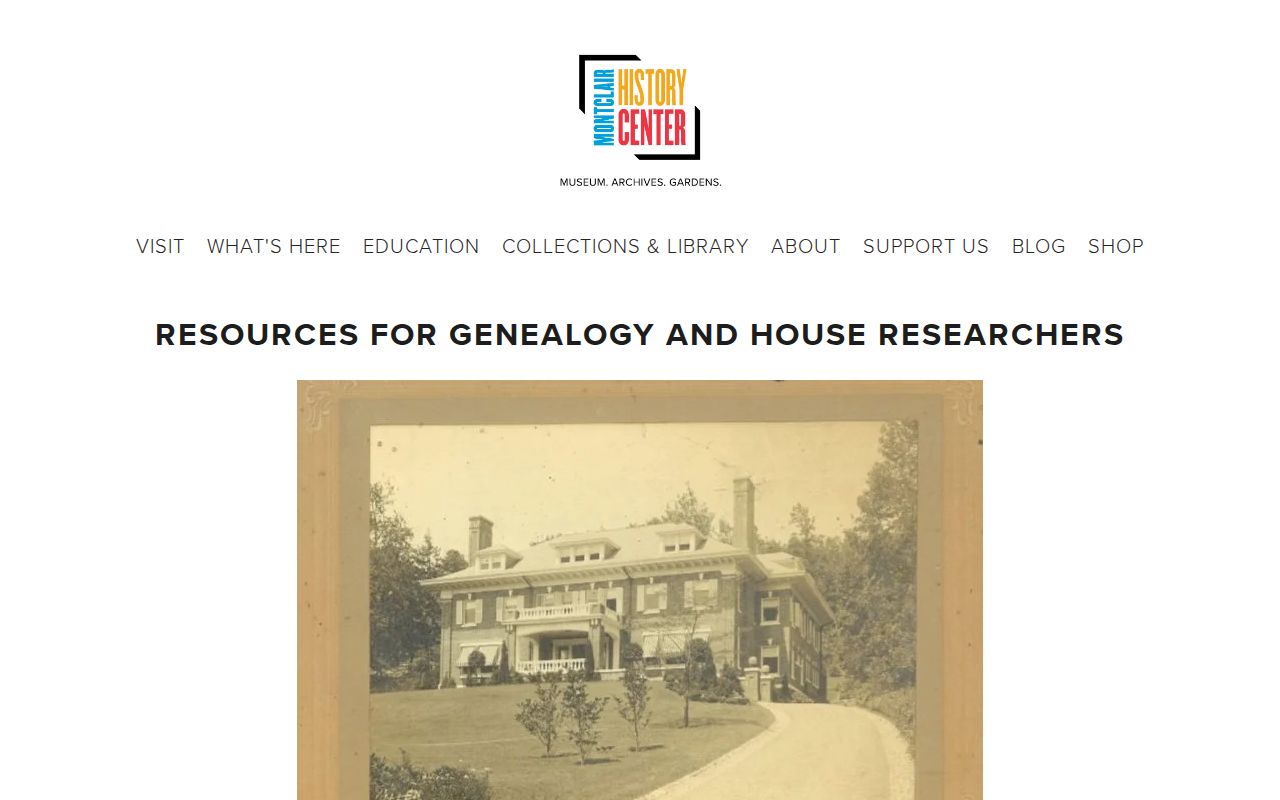
Maps can bridge an old street name or parcel description, but a map label alone does not identify an occupant.
Montclair Local-History Companions
Yearbooks, local newspapers, oral histories, cemetery records, and organization files can help distinguish two people with similar names. MPL has high-school yearbooks and Montclair Times microfilm, while the History Center has yearbooks, oral histories, the Crane genealogy collection, African-American history material, church and organization files, and local deed material. A yearbook can identify a school community; a cemetery record may offer dates or relationships; an oral history supplies context rather than a formal address record.
Montclair Times microfilm begins in 1877. The Newark Evening News is digitized for 1883-1972 through Newark Public Library, a useful regional companion when a Montclair name appears outside town. The History Center guide also points to Rosedale Cemetery, Mount Hebron Cemetery, and Immaculate Conception. A burial or memorial record may supply dates, relationships, lot ownership, or clues, but it is not proof of residence at the time of death.
These collections work best as corroboration. A newspaper notice or memorial entry can lead to a date, but neither should be used alone to state who occupied a particular home at a particular time.
Montclair Collections Update
In 2025, the Montclair History Center Online Collections portal moved to PastPerfect Web Edition. The change consolidated material that had been split among the public website, LUNA, and a staff database after more than 16,000 objects and archival materials were updated. Keyword and Advanced Search can now surface digitized maps, photographs, postcards, oral histories, Montclair High School football material, and Montclair Dramatic Club material; more non-digitized collections may be added over time.
Visit the MHC collections portal to search the expanded catalog.
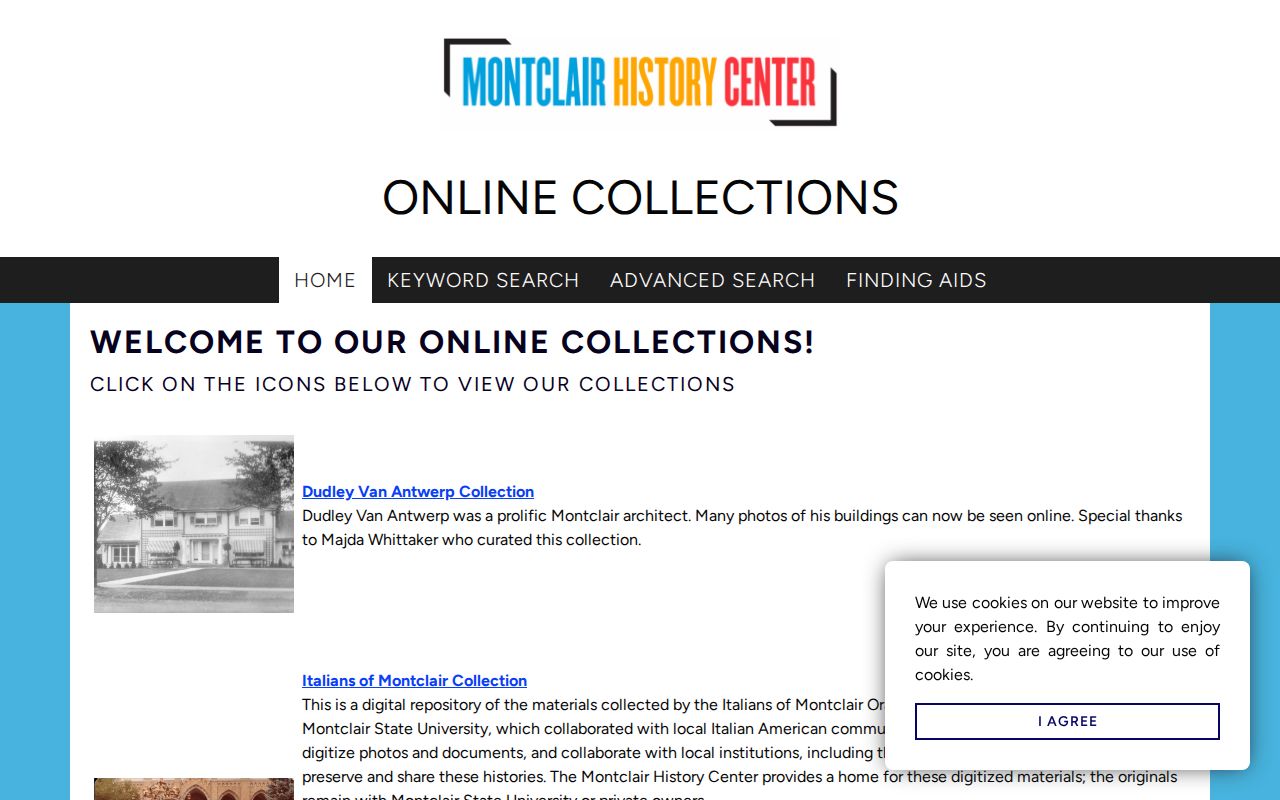
The new catalog is an access point for collection discovery, not evidence that every historical item is digitized or searchable by a person's name.